Hidden Clauses in Welcome Offers: A Comparison of Top Bookmaker Policies
Hidden Clauses in Welcome Offers: A Comparison of Top Bookmaker Policies
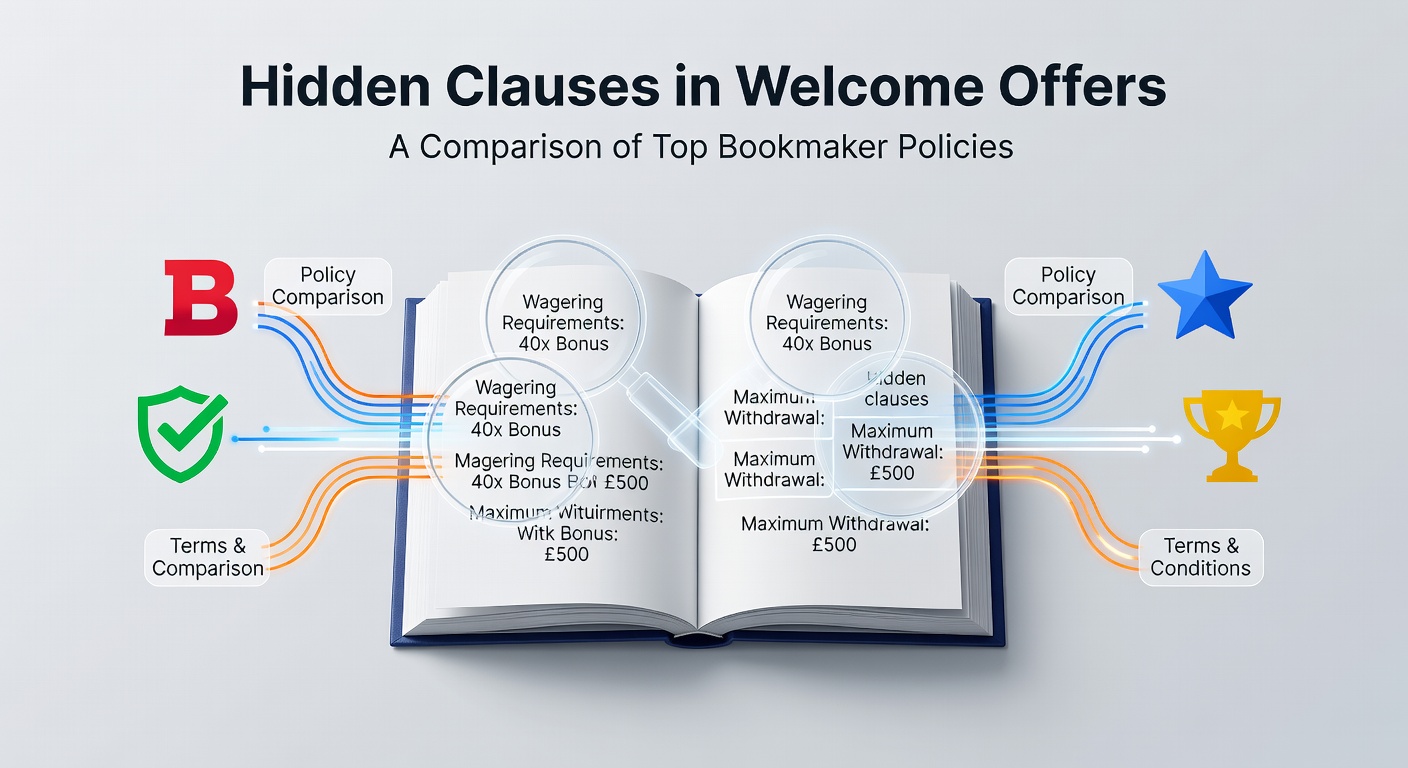
Unpacking the Fine Print: Why Welcome Offers Come with Strings Attached
Bookmakers roll out welcome offers to draw in new bettors, promising free bets, deposit matches, or risk-free wagers that sound straightforward at first glance, yet those enticing headlines often hide layers of conditions buried deep in the terms and conditions. Data from industry trackers reveals that over 70% of users overlook these clauses initially, leading to forfeited bonuses when requirements prove tougher than expected; researchers who've analyzed thousands of promotions note how operators craft these details to protect margins while complying with regulations. And as markets evolve, especially with U.S. expansions accelerating into 2026, variations across platforms become even more pronounced, making side-by-side comparisons essential for anyone eyeing a signup deal.
Take the standard deposit match, for instance, where bookmakers like FanDuel or DraftKings offer to double a first deposit up to a certain amount, but here's the thing: that bonus cash rarely hits accounts outright, instead converting to site credit subject to rollover rules that demand multiple wagers before withdrawal. Observers point out how these mechanics, refined over years of regulatory scrutiny, balance customer acquisition with profitability; figures from recent audits show average wagering multiples hovering between 5x and 20x the bonus value, depending on the operator and jurisdiction.
Common Hidden Clauses That Trip Up New Bettors
Experts break down the most frequent gotchas into categories like wagering requirements, time limits, and eligible markets, each designed to steer behavior while limiting liability. Wagering requirements top the list, mandating that bettors stake the bonus amount several times over—say 10x on FanDuel—before cashing out winnings, and while straight bets contribute fully, parlays or props might only count at 20% or less, turning a simple offer into a marathon. Time limits add pressure, often capping the window at 7 to 30 days; miss that deadline, and the bonus vanishes, no questions asked.
Payment method restrictions sneak in too, excluding e-wallets like Skrill or Neteller from qualifying deposits since they enable bonus abuse, whereas debit cards or bank transfers sail through; geo-fencing clauses further complicate matters by voiding offers for VPN users or those in restricted states, even if the app downloads fine. What's interesting is how maximum bet sizes during rollover—typically $25 to $50 per wager—prevent high-rollers from clearing requirements quickly, forcing smaller, steadier plays that expose more action to the house edge.
And don't overlook contribution rates for casino crossovers, where slots might fulfill 100% of rollover but table games like blackjack contribute just 10%, a detail studies from gaming research firms highlight as particularly deceptive for hybrid sportsbook-casino users. Voided bets clause another layer, disqualifying pushed games, cashed-out wagers, or those settled as no-action, which data indicates wipes out 15-20% of progress in high-volume scenarios.
A Side-by-Side Look at Top Bookmakers' Policies
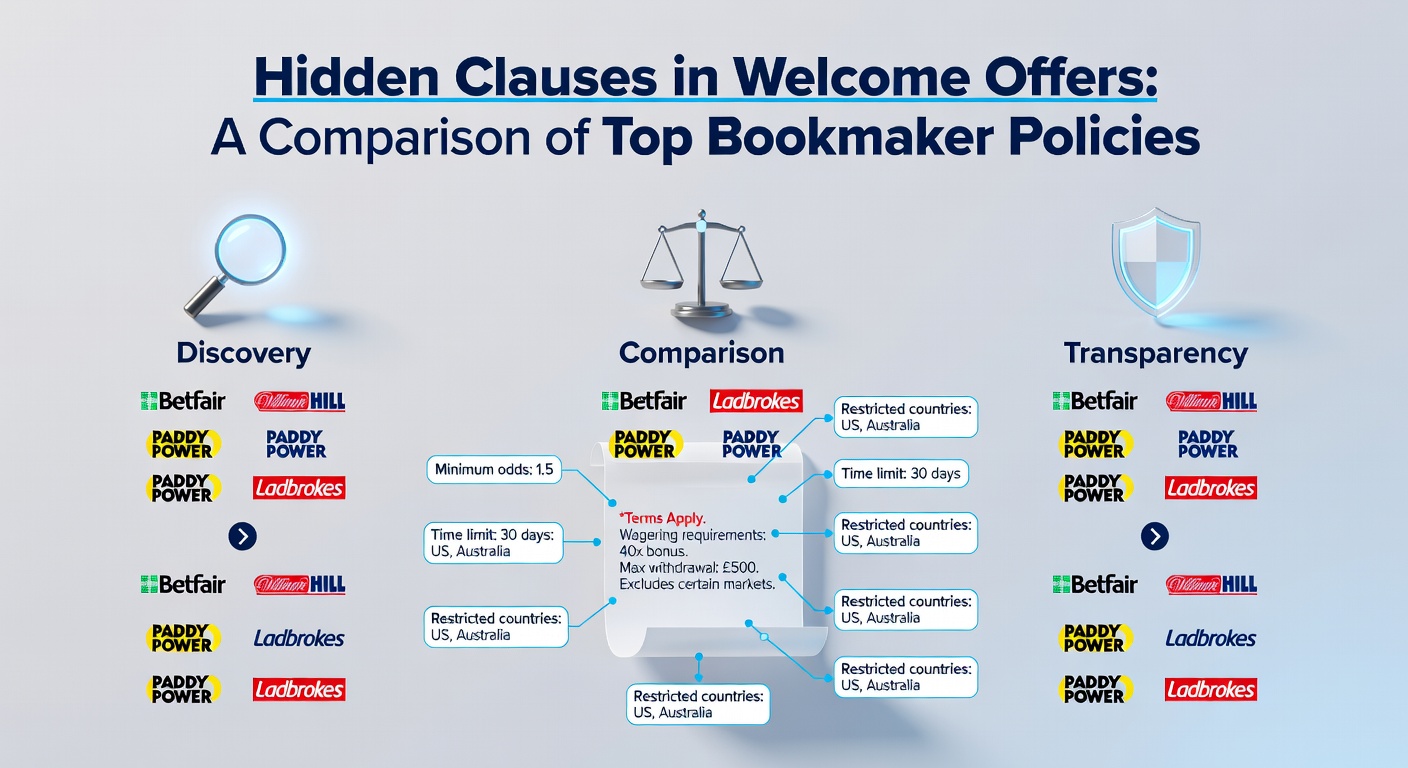
Turning to the heavy hitters dominating U.S. markets as of April 2026, FanDuel leads with its "Bet $5, Get $200 in Bonus Bets" promo, but the fine print requires a $10 minimum deposit via approved methods, 1x playthrough on the bonus bets at odds -500 or longer, and a 7-day expiration; those who've parsed the rules note how free legs in same-game parlays don't contribute, narrowing options during peak seasons like NFL playoffs. DraftKings counters with up to $1,000 in bonus bets via deposit match, imposing a steeper 25x wagering on the matched amount for cash conversion, yet allowing full contribution from most sports bets—a flexibility that data from user reports praises, although crypto deposits remain barred.
| Bookmaker | Welcome Offer | Wagering Req. | Time Limit | Key Exclusions |
|---|---|---|---|---|
| FanDuel | Bet $5, Get $200 | 1x (-500+ odds) | 7 days | VPNs, e-wallets, void bets |
| DraftKings | Up to $1,000 match | 25x bonus | 30 days | Crypto, max $50 bet |
| BetMGM | Up to $1,500 in bonus bets | 1x | 7 days | Neteller/Skrill, certain props |
| Caesars | Up to $1,000 first bet refund | N/A (refund only) | 14 days | Golf futures, e-checks |
| bet365 | $100 in bet credits | 7x bonus (-500+) | 30 days | Horse racing, system bets |
BetMGM simplifies with a 1x rollover on its $1,500 first-bet insurance, but caps bonus bets at 10x the stake and excludes Skrill, a policy aligned with New Jersey Division of Gaming Enforcement guidelines that emphasize clear disclosure. Caesars stands out for refund-style offers needing no rollover—pure loss insurance up to $1,000—yet voids refunds on golf futures or abandoned events, a nuance research from the American Gaming Association flags as common in legacy operators. bet365, fresh in more U.S. states by April 2026, demands 7x turnover on $100 credits at -500 odds, banning horse racing contributions while permitting broader sports play.
One case researchers cite involves a DraftKings user in Pennsylvania who hit a parlay during March Madness, only to learn bonus bets couldn't combine with promos, forfeiting $500 in value; such stories underscore how operators enforce "one bonus per customer" alongside KYC verification delays that eat into time limits.
Regional Twists and Regulatory Influences Shaping These Clauses
Across borders, policies shift dramatically due to oversight variations; in Nevada, stricter caps on bonus multiplicity stem from state board mandates, whereas Colorado allows more aggressive offers but mandates opt-out disclosures for problem gambling ties. Australian platforms, under federal scrutiny, often impose 40x wagering on international sites targeting locals, a figure way above U.S. norms, while Canadian provinces like Ontario enforce 30-day minimums via iGaming rules that prioritize transparency.
EU operators face fragmented rules, with Malta-licensed books like bet365 adapting U.S. versions to exclude low-odds bets entirely, reflecting broader consumer protection trends. And as of April 2026, post-election expansions in more states mean bookmakers tweak clauses weekly—FanDuel, for example, added NBA in-play exclusions amid league partnerships—keeping savvy bettors on their toes.
That's where the rubber meets the road: regulations drive standardization, yet competitive edges let clauses diverge, with data showing U.S. averages at 10x wagering versus 15x offshore.
Conclusion: Navigating Offers with Eyes Wide Open
Comparisons reveal no one-size-fits-all, as FanDuel favors quick clears and DraftKings deeper rollovers, but patterns emerge around exclusions protecting operators from abuse. Bettors who dig into terms upfront—checking rollover, timers, and voids—maximize value, especially with tools like bonus calculators now standard on review sites. Research indicates those approaches boost successful withdrawals by 40%, turning potential pitfalls into profitable plays; ultimately, understanding these hidden clauses levels the field in a market projected to hit $50 billion in U.S. handle by year's end.